
If you are searching for a luscious dessert that balances bold, zesty flavors with ethical, plant-based ingredients, the vegan lemon tart is the answer. This delightful tart merges the creamy, tangy brightness of fresh lemons with a crisp and tender dairy-free crust, forging a show-stopping centerpiece for any occasion.
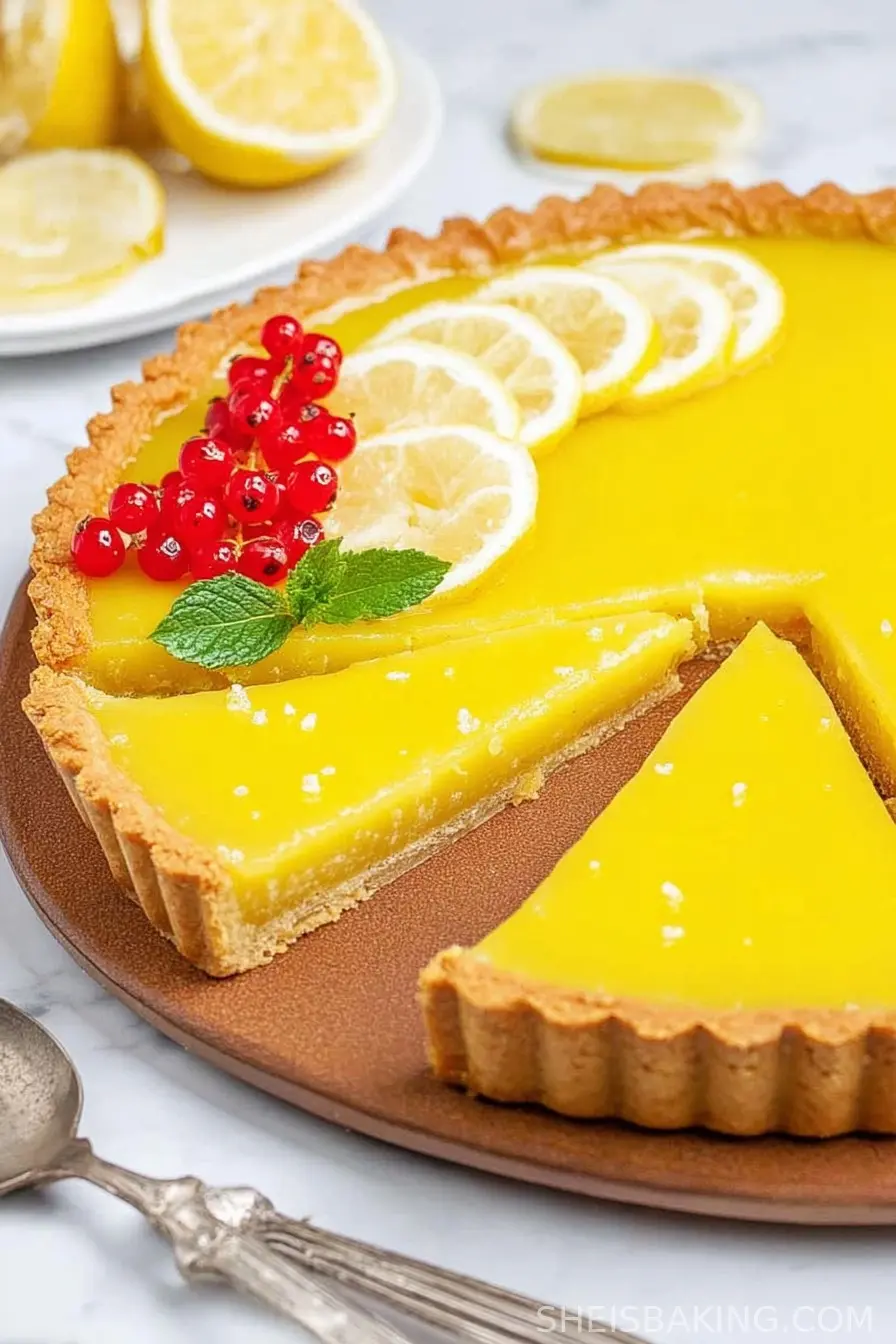
The vegan lemon tart serves as the perfect vegan dessert for spring and summer gatherings, but its refreshing taste makes it a year-round favorite. Lemon tarts have been a beloved treat in European cuisine for centuries, especially in French patisserie.
Traditionally, they rely on eggs and butter to deliver a smooth and rich custard and a flaky crust; however, with the rise of plant-based cooking, talented bakers have engineered a way to craft stunning, flavor-packed tarts without any animal products.
This evolution in baking shows how traditional recipes can be adapted to suit modern needs and dietary preferences without compromising on taste or texture.
Featuring a silky-smooth lemon curd created from ingredients such as coconut milk, cornstarch, and turmeric (for natural color), this vegan tart is as impressive as it is delicious. It is incredibly versatile-perfect for birthdays, holiday dinners, or whenever your soul craves something vibrant.
Plus, with a vegan lemon tart, you are providing an inclusive option that everyone at your table can enjoy. Whether you are a seasoned vegan or just looking to broaden your dessert repertoire, this recipe will soon become a regular in your kitchen.
Ingredients
- 1 ½ cups all-purpose flour
- ¼ cup almond flour
- ⅓ cup coconut oil, solid
- ¼ cup maple syrup
- ¼ teaspoon salt
- 1 tablespoon non-dairy milk (as needed)
- 1 cup canned coconut milk (full fat or light)
- ½ cup fresh lemon juice (about 3 large lemons)
- 1 tablespoon lemon zest
- ⅔ cup organic cane sugar
- 3 ½ tablespoons cornstarch
- 1 tablespoon coconut oil
- ¼ teaspoon ground turmeric (optional, for color)
- 1 teaspoon pure vanilla extract
- Pinch salt
Instructions
- Preheat your oven to 350°F (175°C). Prepare a 9-inch tart pan with a removable bottom by lightly greasing it.
- In a mixing bowl, combine all-purpose flour, almond flour, and salt. Add solid coconut oil and maple syrup. Use a fork or pastry blender to cut the coconut oil into the flour mixture until it resembles coarse crumbs.
- Add one tablespoon of non-dairy milk if the dough appears too dry. Gently knead the dough until it forms a ball. Press the dough evenly into the prepared tart pan, covering the bottom and pressing up the sides.
- Prick the base of the crust gently with a fork several times. Bake the crust for 12-15 minutes, or until lightly golden. Set aside to cool completely.
- For the lemon filling, whisk together coconut milk, lemon juice, lemon zest, cane sugar, cornstarch, turmeric, salt, and vanilla in a medium saucepan.
- Place saucepan over medium heat, whisking constantly. Continue to cook until the mixture thickens significantly, about 6-8 minutes. Once bubbly and thick, remove from heat and whisk in 1 tablespoon coconut oil for a glossy texture.
- Allow the filling to cool for 10 minutes, whisking occasionally to prevent a skin from forming.
- Pour the cooled lemon filling into the baked tart crust, smoothing the top with a spatula.
- Let the tart cool at room temperature for 30 minutes, then refrigerate for at least 4 hours (preferably overnight) to set fully.
- Before serving, garnish the vegan lemon tart with extra lemon zest, sliced fresh fruit, or edible flowers if desired. Slice and serve chilled.
Nutritional Information
The vegan lemon tart is not only a joy to the palate but also offers a relatively health-conscious indulgence compared to its traditional counterparts. A single slice (when the tart is divided into eight servings) is estimated to provide approximately 250 to 300 calories.
This dessert is free from cholesterol as it contains no eggs or dairy. The use of coconut oil and almond flour introduces some healthy fats and a moderate amount of dietary fiber, providing longer-lasting satiety and slower energy release.
The primary sweetener, organic cane sugar, is used in a measured quantity, and there is the option to substitute part of it with a natural sweetener like maple syrup for an even gentler effect on blood sugar levels.
The addition of lemon zest and juice not only imparts a bold, fresh flavor but also provides vitamin C, an antioxidant vital for immune health and skin vibrancy.
Coconut milk serves as a creamy base while offering medium-chain triglycerides (MCTs), a type of fat whose metabolism differs from longer-chain fatty acids. People with gluten sensitivity can adapt the crust by using a gluten-free flour blend.
With no animal-derived ingredients, the vegan lemon tart is a smart dessert for those seeking to reduce saturated fat and cholesterol intake while still enjoying a classic treat. Moderation remains key, but this dessert fits comfortably within a balanced, whole foods-based plant diet.

Wine and Beverage Pairings
With its bright citrus notes and creamy texture, a vegan lemon tart pairs especially well with beverages that complement or balance its flavors. For non-alcoholic options, try a lightly brewed Earl Grey tea-its floral bergamot nuances blend beautifully with the sharpness of lemon.
Herbal teas like chamomile or rooibos create a gentle backdrop, allowing the lemony zing of the tart to shine. For a truly refreshing experience, a cold glass of sparkling water with a squeeze of lemon adds effervescence and cleanses the palate between bites.
For those seeking a wine pairing, a glass of chilled Moscato d'Asti or Prosecco brings out the sweet, fruity undertones of the tart, while a late harvest Riesling accentuates its tanginess.
If serving during brunch, accompany your tart with a flute of mimosa or a glass of fresh-squeezed orange juice for a citrus-forward harmony. Select beverages that do not overshadow the delicacy of the dessert, ensuring each bite and sip are complementary.
Cooking Tips and Variations
Perfecting your vegan lemon tart involves a few simple tricks and opens up avenues for customization. For the crust, ensure the coconut oil is solid but not rock-hard-this results in a beautifully tender texture.
Almond flour adds nutty depth and softness; for a nut-free version, simply use more all-purpose flour or try oat flour. For those fond of whole grains, a partial substitution with spelt or whole wheat flour boosts fiber and nutrition. When making the filling, constantly whisk for a lump-free, silky finish.
Turmeric is entirely optional and serves purely for color; use a tiny amount, as its flavor can overpower. For a coconut-free version, use a thick oat or soy cream in both filling and crust. To enhance the tart's elegance, garnish with candied lemon slices or piped vegan whipped cream.
You can even add fresh berries before serving for a burst of color and flavor. For a refined finish, dust with powdered sugar just before serving. Make individual mini-tarts for single servings, adjusting the baking time accordingly. Refrigerating overnight ensures the filling sets perfectly, resulting in clean, neat slices.
With straightforward substitutions and a bit of practice, you can create a vegan lemon tart tailored to your dietary needs and creative whims.

Serving Suggestions
Presenting your vegan lemon tart to guests can transform a simple meal into a memorable occasion.
For a striking appearance, place the tart on a cake stand and garnish with swirls of vegan whipped cream, a scattering of fresh seasonal berries, and curls of lemon zest or edible flowers such as violets or pansies.
Each of these elements introduces color and freshness, making the dessert a feast for the eyes as well as the palate. For individual servings, consider slicing the tart into modest wedges, ensuring neat, clean edges by dipping your knife into hot water and wiping it between cuts.
This extra step maintains the tart's picture-perfect presentation. If you want to elevate your serving style, offer each slice with a dollop of coconut yogurt or a fine dusting of powdered sugar.
In the warm months, a scoop of vegan vanilla or coconut ice cream beside each tart slice adds cool creaminess and extra indulgence. Remember to serve the tart chilled, as this brings out the brightness of the lemon curd while keeping the texture satisfyingly firm.
Whether at casual gatherings or elegant affairs, this vegan lemon tart will capture the attention and admiration of everyone at your table. Coordinating your tableware with yellow or white tones can further accentuate the sunshiny appeal of this beloved vegan dessert.
Health Benefits
Making a vegan lemon tart is not just about crafting a delicious and beautiful dessert, but also about making mindful choices for your well-being.
By substituting eggs and butter with plant-based alternatives like coconut oil and almond flour, the tart is free of animal cholesterol, making it heart-friendly for many people.
The lemons provide a robust dose of vitamin C, an essential antioxidant that boosts immune function, aids iron absorption, and promotes healthy, youthful skin. The almond flour brings vitamin E and good monounsaturated fats which support cardiovascular and cognitive health.
Coconut milk, despite its richness, contains medium-chain triglycerides believed to foster better metabolism and potentially aid in energy expenditure. The absence of dairy helps avoid lactose intolerance trigger points and reduces overall saturated fat content commonly found in traditional tarts.
Preparing desserts at home, such as this vegan lemon tart, means controlling sweetness levels and avoiding preservatives or additives often present in store-bought baked goods. For those with gluten intolerance, simply substitute a gluten-free flour blend to retain the tart's integrity.
Including plant-based desserts like this one in your routine is an enjoyable way to boost your nutrient intake while supporting a more sustainable and compassionate lifestyle.
Frequently Asked Questions
Absolutely! Substitute a gluten-free all-purpose flour blend for regular wheat flour in the crust. Ensure that all other ingredients, such as baking powder (if used), are also certified gluten-free.
Store the tart covered in the refrigerator for up to 4 days. Keep it in an airtight container to preserve freshness and prevent it from absorbing other odors.
Yes, you can prepare the filling a day in advance and store it in the refrigerator. When ready to assemble, give it a good whisk before pouring it into the baked crust.
Yes, you can use a thick oat or soy cream instead of coconut milk. This will maintain a creamy consistency and allow for a coconut-free version.
A small pinch of turmeric is used solely to enhance the yellow color of the lemon filling. It does not noticeably affect the flavor when used sparingly.
The vegan lemon tart beautifully unites nostalgic, classic flavors with the innovation and inclusivity of modern plant-based cooking. This sumptuous dessert offers all the creamy, zesty brightness you expect from a lemon tart, but with a compassionate twist-free from eggs, dairy, or refined ingredients. Whether you're catering to dietary restrictions or simply curious to try a vibrant, dairy-free tart, this recipe is sure to satisfy. Its dazzling appearance, energizing citrus tang, and wholesome components make it a star attraction at any meal. Enjoy baking and sharing this vegan lemon tart, knowing you're creating a treat that's beloved by both vegans and non-vegans alike. Embrace the sweet, tangy, and utterly delightful world of vegan desserts-one satisfying slice at a time.
Ingredients
- 1 ½ cups all-purpose flour
- ¼ cup almond flour
- ⅓ cup coconut oil, solid
- ¼ cup maple syrup
- ¼ teaspoon salt
- 1 tablespoon non-dairy milk (as needed)
- 1 cup canned coconut milk (full fat or light)
- ½ cup fresh lemon juice (about 3 large lemons)
- 1 tablespoon lemon zest
- ⅔ cup organic cane sugar
- 3 ½ tablespoons cornstarch
- 1 tablespoon coconut oil
- ¼ teaspoon ground turmeric (optional, for color)
- 1 teaspoon pure vanilla extract
- Pinch salt
Instructions
-
1Preheat your oven to 350°F (175°C). Prepare a 9-inch tart pan with a removable bottom by lightly greasing it.
-
2In a mixing bowl, combine all-purpose flour, almond flour, and salt. Add solid coconut oil and maple syrup. Use a fork or pastry blender to cut the coconut oil into the flour mixture until it resembles coarse crumbs.
-
3Add one tablespoon of non-dairy milk if the dough appears too dry. Gently knead the dough until it forms a ball. Press the dough evenly into the prepared tart pan, covering the bottom and pressing up the sides.
-
4Prick the base of the crust gently with a fork several times. Bake the crust for 12-15 minutes, or until lightly golden. Set aside to cool completely.
-
5For the lemon filling, whisk together coconut milk, lemon juice, lemon zest, cane sugar, cornstarch, turmeric, salt, and vanilla in a medium saucepan.
-
6Place saucepan over medium heat, whisking constantly. Continue to cook until the mixture thickens significantly, about 6-8 minutes. Once bubbly and thick, remove from heat and whisk in 1 tablespoon coconut oil for a glossy texture.
-
7Allow the filling to cool for 10 minutes, whisking occasionally to prevent a skin from forming.
-
8Pour the cooled lemon filling into the baked tart crust, smoothing the top with a spatula.
-
9Let the tart cool at room temperature for 30 minutes, then refrigerate for at least 4 hours (preferably overnight) to set fully.
-
10Before serving, garnish the vegan lemon tart with extra lemon zest, sliced fresh fruit, or edible flowers if desired. Slice and serve chilled.
Approximate Information for One Serving
Nutrition Disclaimers
Number of total servings shown is approximate. Actual number of servings will depend on your preferred portion sizes.
Nutritional values shown are general guidelines and reflect information for 1 serving using the ingredients listed, not including any optional ingredients. Actual macros may vary slightly depending on specific brands and types of ingredients used.
To determine the weight of one serving, prepare the recipe as instructed. Weigh the finished recipe, then divide the weight of the finished recipe (not including the weight of the container the food is in) by the desired number of servings. Result will be the weight of one serving.
Did you make this recipe?
Please consider Pinning it!
Leave a Reply